Engagement and Empowerment
Strong democratic societies require the active engagement and empowerment of young people. Highlighting their potential as catalysts for change, young people have often found themselves at the forefront of political developments in the Eastern Partnership (EaP) in 2024. They have demonstrated resilience and resistance in the face of civil society crackdowns in Azerbaijan, Belarus and Georgia, and are actively driving democratisation processes in Armenia, Moldova and Ukraine. Moreover, the ongoing EU accession negotiations with Ukraine and Moldova offer young people the opportunity to actively shape their countries’ European future.
To support youth engagement and empowerment in 2024, the EU4Youth programme placed a particular focus on enhancing the quality and outreach of youth work in the EaP region, while at the same time reinforcing participatory youth structures at national and local levels. To the extent possible, the programme also engaged with public institutions in EaP countries, focusing on bridging the gap between policymakers and youth and promoting an inclusive youth dialogue. Finally, the programme continued to actively involve young people in community initiatives through the EU4Youth Alumni Network, creating a ripple effect of youth empowerment through peer-to-peer engagement.
Showing the substantial impact of these actions on youth empowerment in the region, the annual EU4Youth survey of young beneficiaries revealed that seven out of ten (70%) felt that the programme had empowered them to get involved in their communities and help support others. Furthermore, nearly a third of the respondents (32%) confirmed that their participation in EU4Youth-funded projects had helped them to become more active citizens.
Enhancing the quality and outreach of youth work

Youth work plays a crucial role in fostering social inclusion and active citizenship among young people. Civil society organisations (CSOs) provide essential opportunities and support for youth development and community engagement at the local level. They also serve as an important voice for the inclusion of young people’s needs and concerns in local decision-making.
In the EaP region, many youth organisations struggle with insufficient human and financial resources, especially in rural and disadvantaged areas, leading to the exclusion and underrepresentation of already vulnerable youth. In addition, local organisations often lack the institutional expertise to design and implement impactful initiatives.
To help overcome these challenges, the EU4Youth programme placed a strong focus on improving the quality and reach of youth work, providing strategic financial and capacity building support to youth civil society actors across the EaP region.
The new EU4Youth small grants scheme
With the objective of mobilising youth across the EaP region, the EU4Youth - Youth Engagement and Empowerment project announced a call for proposals in 2024, targeting youth organisations in Armenia, Georgia, Moldova, and Ukraine. The call received more than 250 applications, highlighting the strong interest and need for additional resources in the youth work sector.
Across the four countries, 33 organisations were awarded up to EUR 15,000 to implement innovative projects focused on reaching young people with fewer opportunities, including those living in remote or conflict-affected areas. Over the next year, the grants will support inclusive youth engagement at both local and national levels, while also reinforcing capacity building and cooperation among stakeholders.
Youth engagement in decision making in Armenia
Nine grant projects were selected in Armenia, with initiatives led by local youth organisations set to engage thousands of young people across the country. Spanning diverse communities, the selected projects will tackle key social, civic, and environmental challenges by fostering leadership and community engagement among youth.
The project implemented by the Youth Cooperation Centre of Dilijan seeks to increase youth engagement in decision-making processes in the Tavush region. With the help of the grant, the project will equip young people with the necessary skills and knowledge to effectively engage with their communities. It will also foster dialogue and partnerships between youth, decision-makers and civil society organisations to better navigate issues concerning youth participation.
Other grant beneficiaries in Armenia include include: ‘WE’; ‘Altera lab’; ‘Armavir Development Centre’; ‘Civil Youth Centre’; ‘Partnership and Teaching’; ‘Hub Artsakh’; ‘Uniting Bridges’; AMIA community.
Young leaders for climate change in Georgia
In Georgia, nine CSOs received funding to implement projects that foster young people’s environmental awareness and local engagement in decision-making.
The organisation ‘Helping Hand‘, one of the selected grantees in Georgia, has launched their project Empowering Young Leaders for Climate Change. The project empowers youth to learn more about their rights and responsibilities in tackling climate risks, encouraging them to actively participate in decision-making processes within their communities.
Other beneficiaries in Georgia include: the ‘Coalition of Independent Living’; ‘Young Pedagogues Union’; ‘Atinati’; ‘Youth Centre Illuminator’; ‘Step Toward Success’; ‘Equal Education Opportunities for Everyone’; ‘Foundation of Economic Education of Georgia’; ‘Equality Movement’.
Youth empowerment and leadership in Moldova
In Moldova, six organisations were awarded grants to support young people in remote areas, focusing on engaging youth in local community initiatives.
The Regional Community Development Centre, a youth organisation based in Cahul, Moldova, launched the YELI – Youth Empowerment and Leadership Initiative with the support of the small grant scheme. The project empowers young leaders from the Cantemir, Leova, Ceadîr-Lunga, Căușeni and Taraclia districts of Moldova to foster positive changes in their local communities.
Other grants in Moldova include: A.O. ‘RENAȘTEREA’; A.O. ‘Asociația pentru Drepturile Omului LEX XXI’; A.O. Centrul Republican ‘Gutta-Club’; A.O. ‘Inițiative Civice pentru Minoritățile Naționale’; ‘Institutul pentru Inițiative Rurale’.
Youth participation in Ukraine
Finally, in Ukraine, nine selected CSOs will implement projects with a particular focus on youth participation in Ukraine’s recovery efforts.
One of the funded initiatives in Ukraine is the Girls Empowerment Academy 1.0, a project proposed by the Women’s League NGO to foster leadership and active participation among young women in Ukraine.
The initiative seeks to equip girls with the necessary skills and knowledge to influence decision-making processes in their communities and beyond, creating a cohort of strong female changemakers. Throughout 2025, selected young women will benefit from activities designed to enhance their leadership skills, boost their public speaking confidence, and provide them with the tools to implement their own initiatives.
Other beneficiaris in Ukraine include: the ‘Institute of Creative Innovations’; ‘STATUM Centre’; ‘Union of Youth Organisations of Vinnytsia Region’; ‘Force in Unity’; ‘Youth Vitryla’; ‘Unbreakable Youth’; ‘Youth Development Centre’; ‘League of Changes’.

Youth Work Wiki
The EU4Youth - Coordination and Support project developed new thematic reports for the Youth Wiki, an online platform providing information on European and Erasmus+ countries’ youth policies.
In collaboration with the Council of Europe-EU Youth Partnership, the EU4Youth programme is regularly updating and developing EaP country reports on various youth-related topics, offering insights into emerging trends, challenges, and achievements in the EaP region.
The findings of the new Youth Work reports were presented to regional youth work leaders in Skopje, North Macedonia at a seminar on Advocating for Youth Work in Eastern and South-East Europe in October.
Strengthening young voices in policymaking and fostering a participatory youth dialogue
Youth engagement in both local and national policy processes is essential to provide young people with a sense of responsibility and ownership over developments in their countries. Empowering youth to identify and address issues that directly impact them moreover ensures that policies and laws are inclusive and reflective of the diverse needs of youth.
Over the past years, the EU4Youth programme has successfully created pathways to engaging young people in political and civic life in the EaP region, bringing together key stakeholders from government and civil society.
To reinforce the inclusion of young people in decision making and amplify their voices in policy processes, the EU4Youth - Youth Engagement and Empowerment project invested into increasing the capacity of public institutions and youth organisations to jointly drive participatory youth dialogue at the national and local levels.
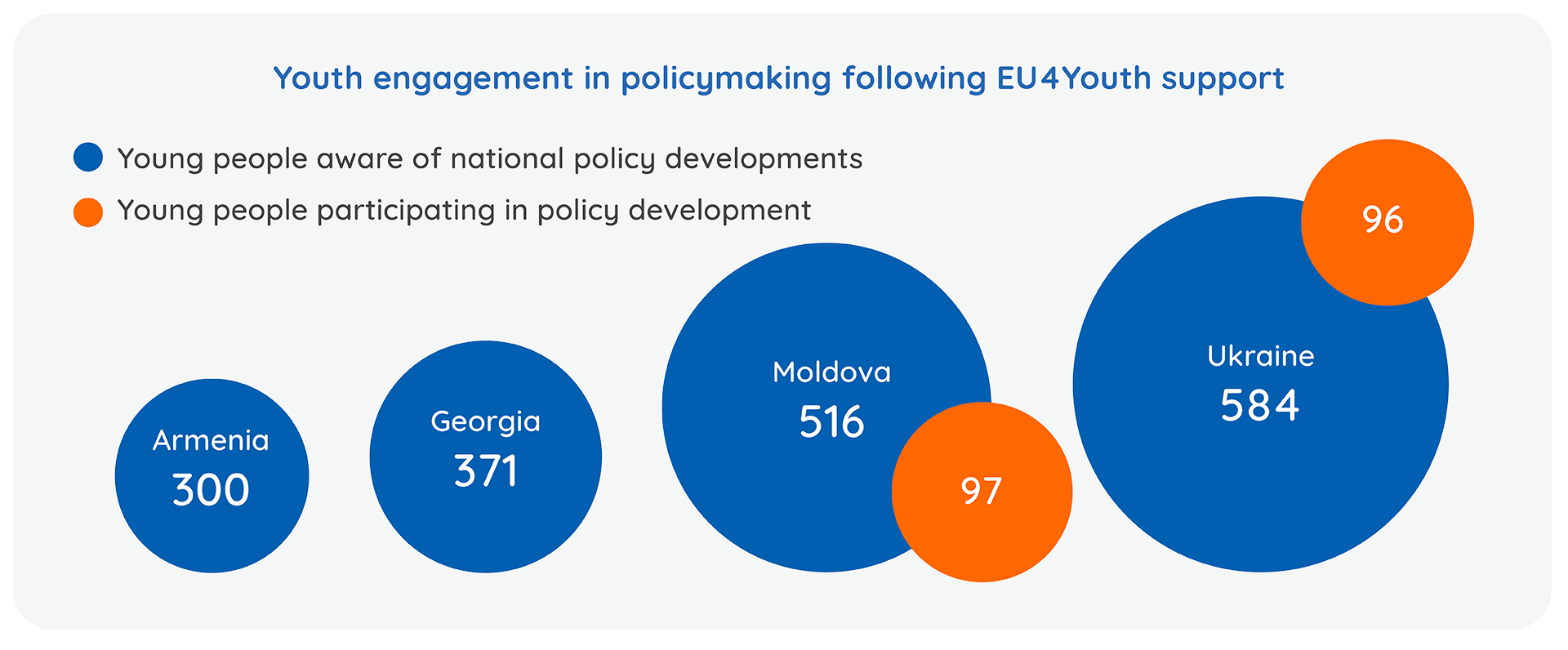
As a result, a total of 1,771 young people learned about national policy developments in 2024, while a further 193 continued to actively participate in policy development after taking part in training activities funded by the EU4Youth programme
Capacity building of youth stakeholders
In Armenia, Moldova and Ukraine, the EU4Youth programme continued its strategic collaboration with public institutions to provide incentives and opportunities for young people’s active participation. At the same time, the programme extended and reinforced its capacity-building support to other key stakeholders in the youth sector, promoting networking, exchange and mutual learning.
Throughout 2024, the EU4Youth - Youth Engagement and Empowerment project implemented a series of trainings and events for youth stakeholders in Armenia, Georgia, Moldova and Ukraine.
In September, the EU4Youth programme organised several study exchanges for public officials and CSOs from the EaP region. The visits to Poland and Lithuania, Latvia and Estonia allowed representatives from youth organisations and youth councils to exchange best practices on youth policy and local-level youth participation.
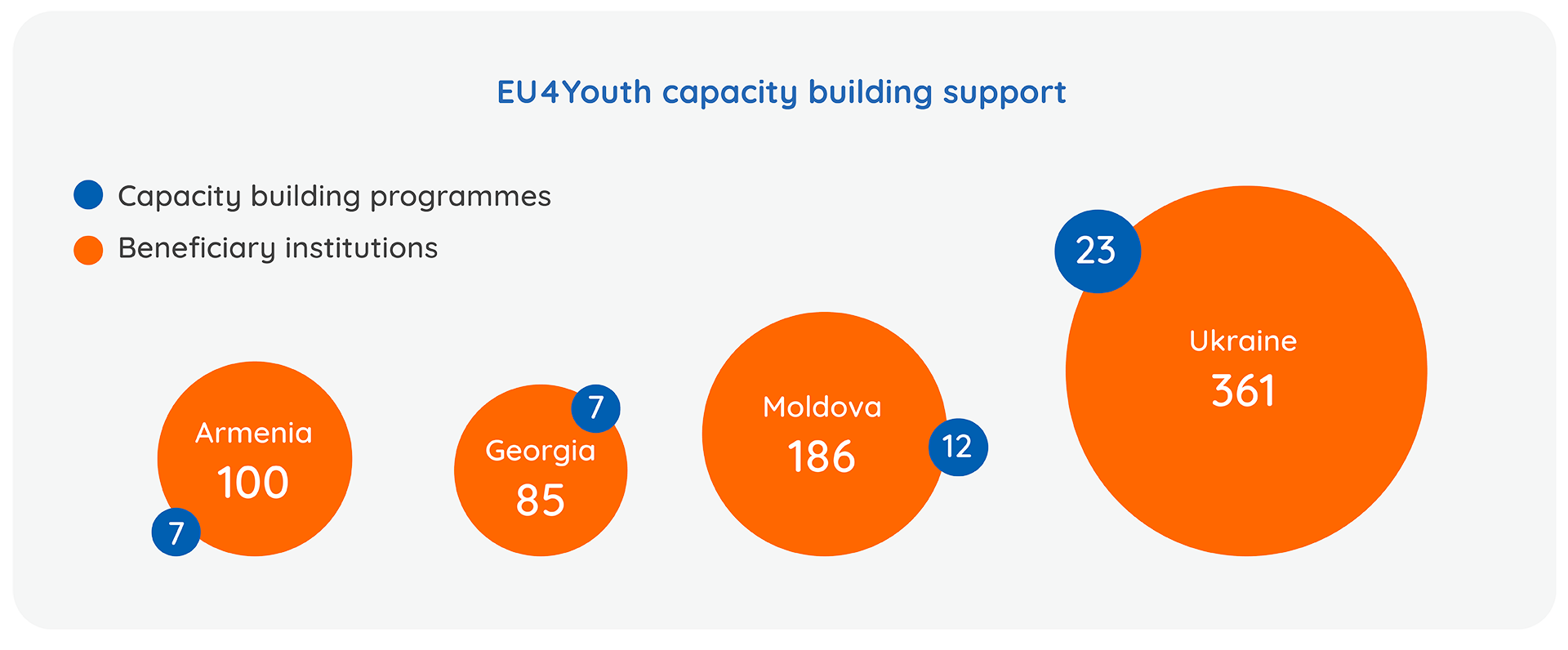
In total, 24 capacity-building programmes for government and youth organisations were implemented in 2024, which directly benefited 501 institutions across the EaP region.
Additionally, the EU4Youth - Engagement and Empowerment project together with the EU4Youth - Coordination and Policy Support project organised several trainings for Youth Policy Labs facilitators in Armenia and Georgia and Moldova and Ukraine to allow local organisations to implement the Policy Lab methodology in their countries.
The EU4Youth Coordination and Policy Support project also developed the concept for a regional Policy Lab Hub to provide further assistance in the conceptualisation, development and monitoring of the Policy Labs in the EaP region.
Support to youth associations and youth councils
The EU4Youth - Youth Engagement and Empowerment project in 2024 awarded grants of up to EUR 50,000 each to youth associations and councils. These grants will strengthen existing youth structures and foster meaningful youth dialogue across the EaP countries.
The grants further support the organisation of Youth Policy Labs in the four EaP countries. Through the Youth Policy Labs, the EU4Youth programme promotes a participatory and youth-centred approach to policymaking processes. Interactive workshops provide opportunities for youth to participate on equal terms with policymakers and to engage meaningfully in the development, evaluation and revision of policies in their countries. The approach also allows decision-makers to better understand young people’s needs and challenges in order to co-develop innovative solutions.
With support from the EU4Youth programme, more than 1,000 participants were involved in Policy Labs and other policy events, including nearly 600 young women and over 800 disadvantaged participants.
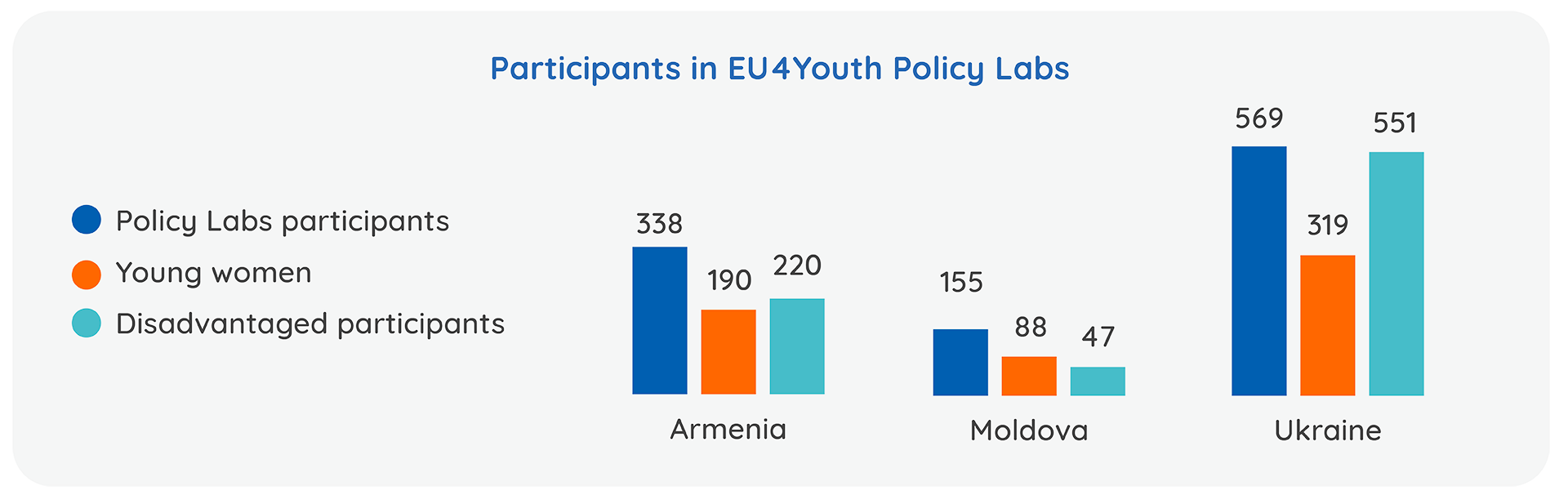
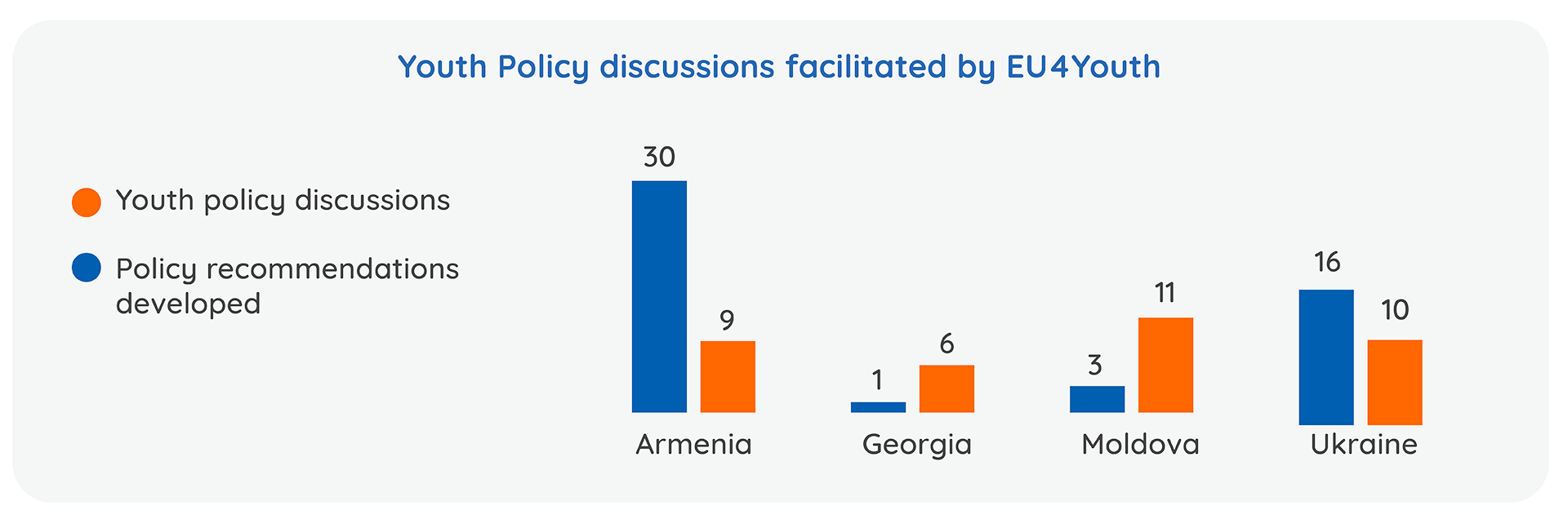
Bridging the gap between decision makers and young people, EU4Youth-funded initiatives in 2024 hosted 36 youth-related policy discussions which resulted in the development of 50 youth policy recommendations.
Working with youth organisations in Armenia
Young people across all ten regions of Armenia benefited from the grant awarded to the Youth Organisations Union of Armenia (YOU) in 2024. With the help of the grant, youth organisations were able to strengthen participatory youth dialogues at national and sub-national levels and to foster youth participation in policymaking through the organisation of Youth Policy Labs across Armenia.
The grant moreover supported the organisation of the official National Youth Forum in 2024 bringing together 150 young people, youth workers, and representatives from youth CSOs across Armenia. The forum provided a dynamic platform for meaningful dialogue, collaboration, and action, addressing relevant issues faced by Armenian youth.
With assistance from EU4Youth, YOU also organised consultations and information sessions with young people on the new Youth Policy Law of Armenia.. In collaboration with the Ministry of Education, Science, Culture and Sport (ESCS), 20 sessions were organised across 10 regions. Together, these policy discussions engaged around 500 young people from April-July 2024. As a result, nine recommendations formulated by participants during the sessions were included in the updated version of the law, showing the impact of empowering young voices in policymaking. The Youth Policy Law was adopted by the Armenian parliament in March 2025.
Grants for youth participation in Ukraine
The National Ukrainian Youth Association (NUMO) was awarded a grant to co-create and implement a standardised youth programme for communities throughout Ukraine. The programme’s objective is to enhance cooperation between young people and local government officials, providing targeted trainings and creating structures for regular policy exchange.
In September 2024, NUMO successfully conducted a first Youth Policy Lab aimed at facilitating the development and implementation of local youth programmes within Ukrainian communities.
In addition, the Ukrainian Youth Councils Association received a grant to enhance young people’s political awareness and engagement with a particular focus on empowering young women to participate in decision-making. The grant will be used to develop a series of trainings and educational materials to strengthen the capacity of local youth councils and CSOs. As a result, local youth structures will be able to better represent and advocate for youth interests, fostering a more inclusive and participatory political environment in Ukraine.
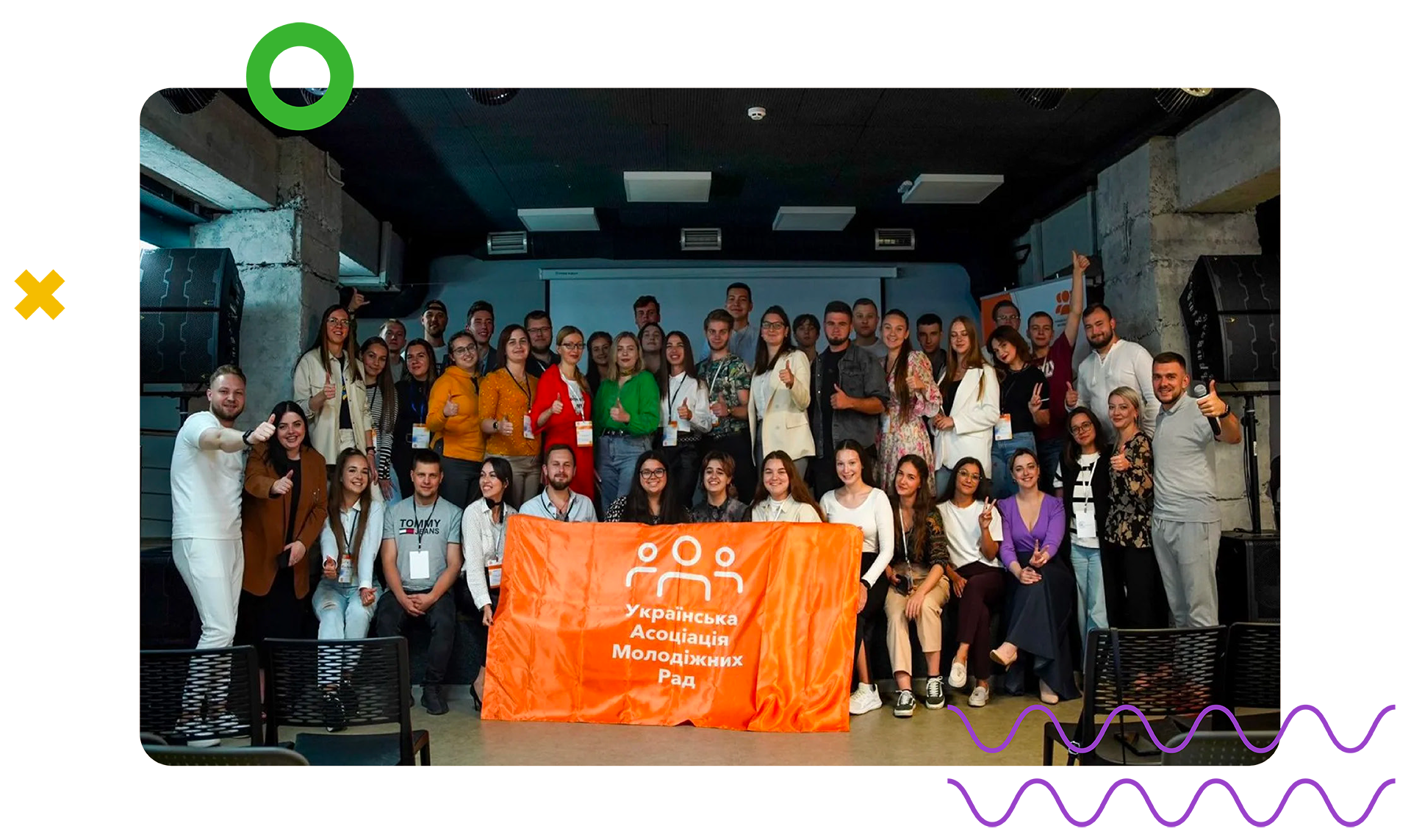
In February 2024, the Ukrainian Youth Councils Association organised the All-Ukrainian Youth Forum gathering more than 70 participants from 22 regions of Ukraine with the goal of promoting collaboration among regional youth councils and strengthening their capacity in wartime conditions.
In August 2024, the Ukrainian Youth Councils Association presented key policy recommendations on enhancing youth advisory bodies in Ukraine developed with the support of the EU4Youth grant.
Boosting local youth councils in Georgia
Strengthening youth participation at the municipal level in Georgia, the Association of the Youth Advisory Councils of Georgia was awarded funding in support of local youth councils in 20 municipalities across Georgia. The grant will allow the councils to better advocate for youth needs in their respective municipalities, encouraging collaboration among councils and public authorities responsible for youth policymaking.
Throughout 2024, the Association of the Youth Advisory Councils of Georgia organised several capacity building trainings for local councils across Georgia.
Strengthening district and municipal youth structures in Moldova
In Moldova, both the National Youth Council of Moldova and the National Network of Local Youth Councils of Moldova received grants to promote active youth engagement in policymaking.
Activities covered by the National Youth Council in 2024 included training sessions on youth participation, an online campaign highlighting the importance of youth engagement, as well as a full Policy Lab Cycle from July to December 2024, fostering inclusive youth dialogue and resulting in recommendations for improving the volunteering law in the country.
The National Youth Council moreover organised an International Youth Conference as well as a National Conference of Youth Organisations to address the role of youth in Moldova’s 2025 Parliamentary Elections and European integration process. Both conferences adopted resolutions reflecting the youth sector’s vision for Moldova’s future, highlighting the proactive role of young leaders in shaping the country’s path.
Complementing activities at the national level, the grant awarded to the National Network of Local Youth Councils of Moldova seeks to strengthen district and municipal youth structures and promote cooperation with local public authorities.
The activities covered by the grant include a hackathon for the development of youth policies and projects, trainings to strengthen the Youth Policy Ambassadors network, and other dialogue activities targeting local councils and public authorities. The implementation of these activities began in November 2024 and will continue until the summer of 2025.
Supporting meaningful youth engagement: highlights from the EU4Youth Alumni Network
Every year, hundreds of young people from the EaP countries participate in EU-funded programmes such as Erasmus+, the European Solidarity Corps, or the Young European Ambassadors. Once they return home, many wish to share their experiences and give back to their communities, supporting those with fewer opportunities. The EU4Youth Alumni Network was created to help these young people to become active changemakers. The network is set up as a space that provides them with the necessary skills and support to launch their own youth initiatives.
Managed by the EU4Youth - Coordination and Policy Support project, in close cooperation with the SALTO Eastern European and Caucasus Resource Centre, and the EU Neighbours East project, the EU4Youth Alumni Network has been particularly successful in enabling peer-to-peer youth engagement to empower disadvantaged youth at the local level.
During each cycle, selected Alumni get to create and implement their own initiatives over the course of a 10-month programme, allowing them to benefit from the experience of seasoned mentors, while also learning from each other. In addition to dedicated skills workshops and coaching, the network offers several opportunities for participants to come together and meet in person, encouraging the young leaders to form meaningful connections that last beyond the duration of the programme.
Since its launch in 2019, the EU4Youth Alumni Network has engaged more than 340 Alumni from the Eastern Partnership countries, helping them to design and implement over 170 local initiatives. Extending the reach and impact of the Network with each initiative, Alumni-led community projects have empowered over 3,770 young people, of whom over 2,850 are from disadvantaged backgrounds.
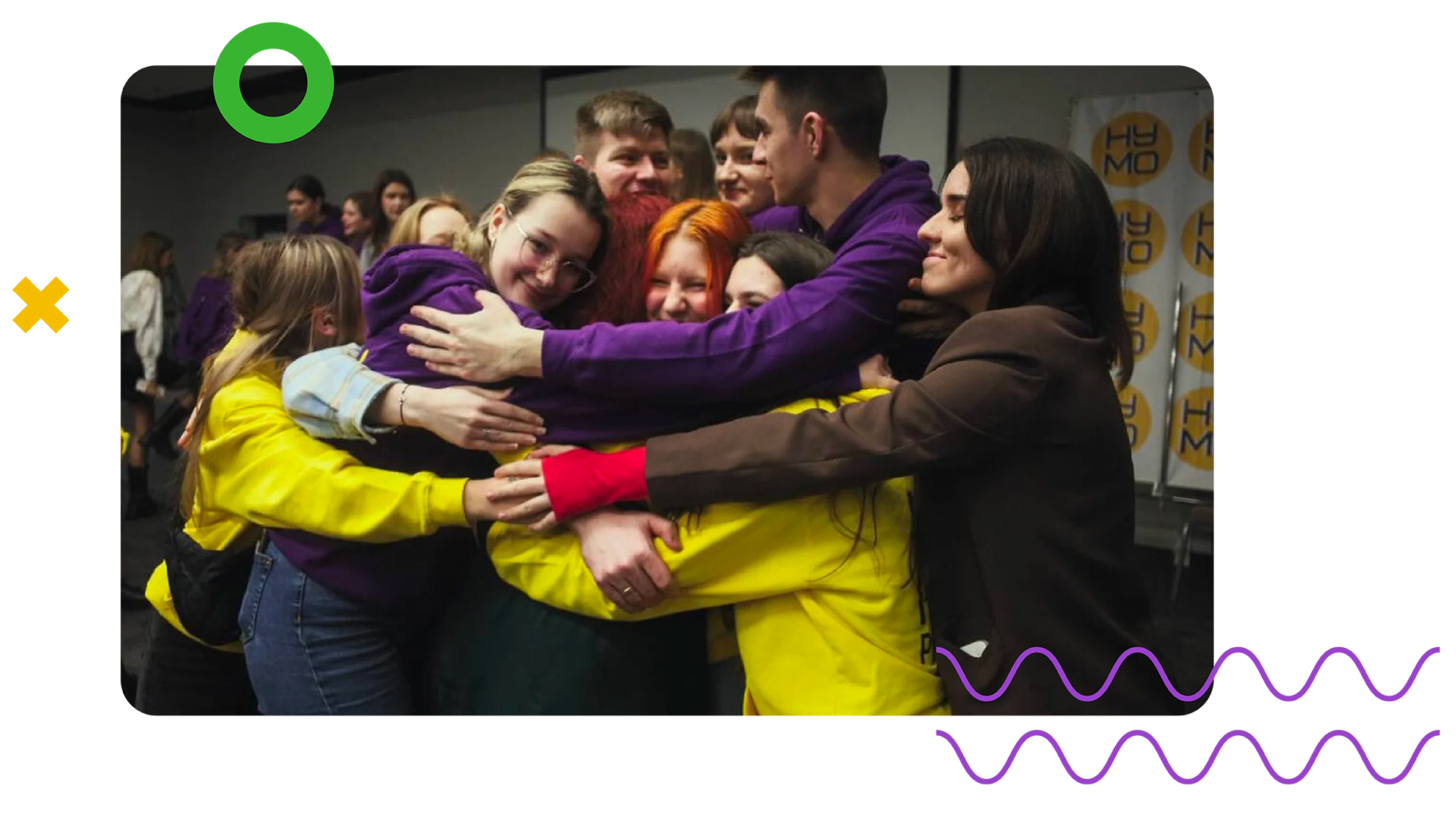
Fourth Alumni Network Cycle
The fourth EU4Youth Alumni Network cycle kicked-off in 2024 with 60 ambitious Alumni from Armenia, Azerbaijan, Georgia, Moldova and Ukraine, ready to gain first-hand experience in youth work.
The cycle reached its first milestone in April with the EU4Youth Alumni Network’s IdeaLab in Tbilisi. Over the course of three days, the Alumni were able to work with experienced mentors to expand their own skill sets and turn their ideas into action.
Nini from Georgia recounts how the support provided by the EU4Youth Alumni Network has helped her to further develop her leadership skills and feel empowered to help other young people at home:
"The EU4Youth Alumni Network has been a transformative experience, teaching me the value of youth engagement and giving me the confidence and tools to make a meaningful impact through local opportunities in my community."
Kanan, a young Alumni from Azerbaijan adds:
“For me, being a part of the EU4Youth Alumni Network has been life changing. It gave me significant mentorship, introduced me to like-minded young leaders, and gave me the tools I needed to affect positive change in my community. The most essential lesson is the sense of empowerment and the understanding that our joint efforts may produce a lasting difference.”
As a result of the dedicated training and coaching provided by the EU4Youth Alumni Network, the young Alumni were able to design and implement over 25 initiatives that addressed various issues in their local communities.
Amongst others, Alumni supported young people in rural areas of Ukraine to allow them to participate in EU-funded youth exchanges, worked with young individuals with mental and physical disabilities in Moldova, and assisted young Armenians and Azerbaijanis in shaping their futures by helping map out the opportunities available to them. In Georgia, Alumni supported local youth through the ’Youth Work for Youth Development‘ initiative in Gardabani, providing essential skills for career development, youth work, and non-formal education to cultivate a generation ready to lead positive community change.
Nino, Ana and Salome, who jointly implemented a project in Georgia, share how impactful these initiatives can be for local youth:
“During the evaluation, someone anonymously shared, ‘I feel that I am not alone’, and it resonated with us deeply. It was a profoundly rewarding moment, a quiet but significant triumph that filled us with pride.
Knowing we had created a space where someone felt genuinely supported, heard, and empowered was an affirmation of our mission. This simple, heartfelt message captured the essence of what we set out to achieve – offering solidarity and care – and reminded us of how meaningful and impactful this work can be.”
In 2024 only, Alumni-led initiatives impacted the lives of over 600 young beneficiaries136, extending opportunities to disadvantaged groups and empowering youth at the local level.
The EU4Youth Alumni Network’s final event in Chisinau marked the completion of the fourth cycle in October, bringing together over 45 Alumni and mentors from the Eastern Partnership region to celebrate the cohort’s achievements and share their experiences and lessons learnt. Participants also discussed suggestions for the future of the network and explored potential approaches to continue engaging with disadvantaged youth and communities.
Outlook: Fifth Alumni Network cycle
A new cycle was launched in October 2024, welcoming a cohort of 60 motivated and outspoken Alumni who started to implement their youth outreach projects throughout 2025.