
Education and Employability
While access to education has improved across the Eastern Partnership (EaP) region, the 2024 ETF cross-country monitoring report on Education, Skills and Employment shows that the relevance and quality of education remains a concern. Specifically, institutions are often lacking the capacities and resources to improve educational outcomes among young people.
Linked to these shortcomings, youth unemployment rates in the region remain high, underscoring the mismatch between the skills provided by the education system and the demands of the labour market.
Recognising the need for improved upskilling and labour market initiatives for young people, the EU4Youth programme has been actively working towards enhancing youth education and employability in the EaP region.
Supporting countries in creating the necessary structures and conditions to assist young people’s transition into the labour market, the programme continued to focus on promoting the recognition of skills acquired through non-formal or informal learning.
In 2024, EU4Youth organised structured competence development activities through its grant projects, trained local youth educators, and offered young people hands-on experiences through scholarships and work-based learning opportunities.
Increasing young people’s work preparedness

Young people in the EaP region have the potential to drive positive change, innovation and economic growth in their countries. Yet many students struggle with finding work or starting their own business after graduating.
In order to assist young people with the transition into the labour market, the EU4Youth programme enables targeted skills trainings to boost work preparedness amongst youth.
Throughout 2024, the programme has implemented a range of competence-development activities aimed at upskilling young people for the digital and green transformations, while at the same time fostering the development of soft skills.
The regional grants funded under the EU4Youth: Youth Employment and Entrepreneurship project have the common objective of increasing employability among youth, with a specific focus on promoting green and digital upskilling, as well as entrepreneurial competences.
These grants have been instrumental in reaching many young people across the region. In 2024:
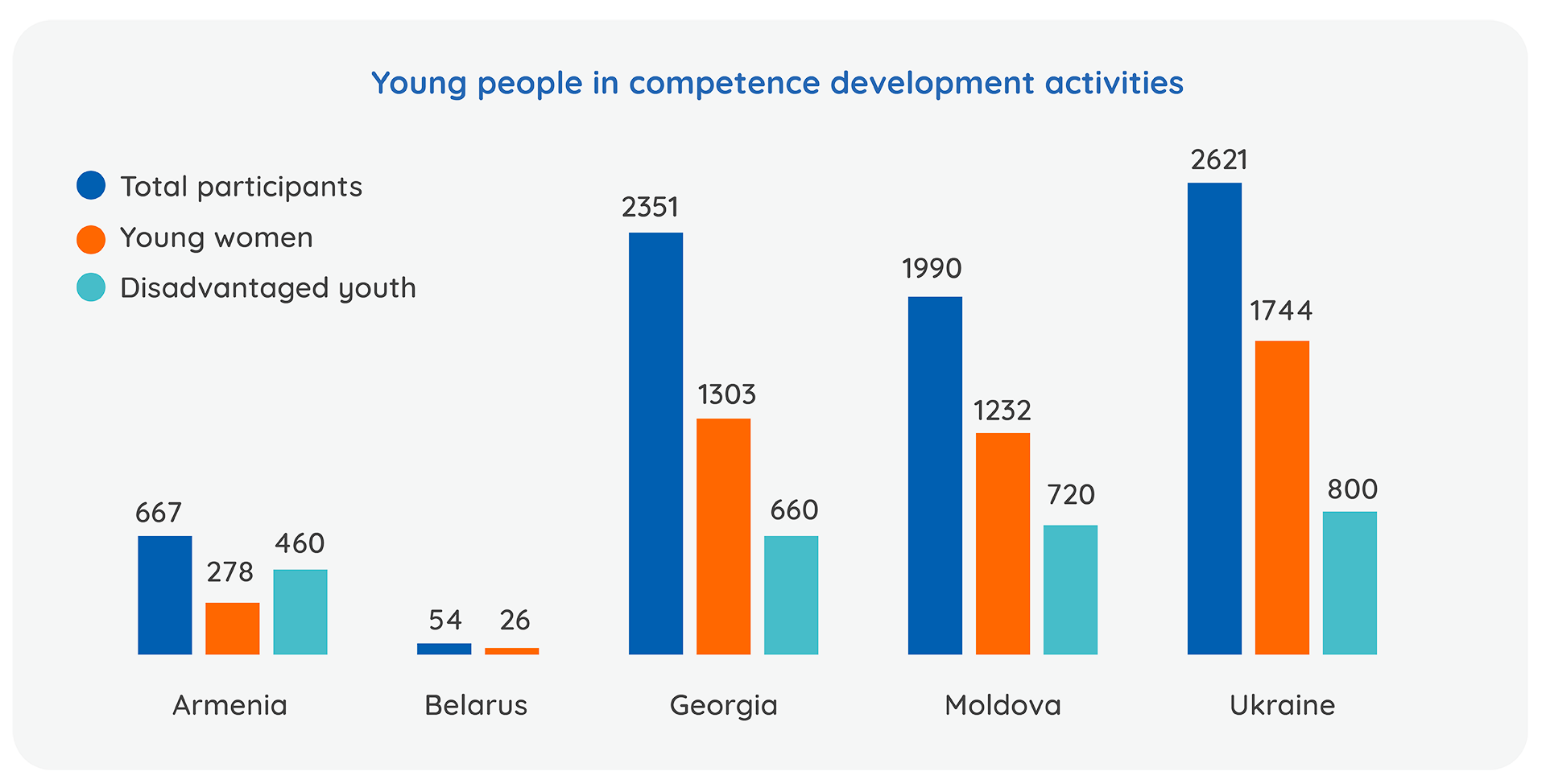
more than 3,800 competence development activities were organised.
Over 7,500 young people benefited from targeted skills trainings and extracurricular learning activities across the region. Over 60% of participants were women while 34% of students were considered disadvantaged youth according to data collected by the grantees.
One of these grants, the ‘SEEDS project’, implemented by the Danish Refugee Council (DRC), is piloting innovative skill development programmes for vulnerable youth in Georgia and Ukraine. In cooperation with Tallinn University in Estonia, it developed a range of tools and methodologies for social entrepreneurship courses, career development trainings, as well as tailored digital and green skills modules. In 2024, the project delivered competence development activities to over 850 young people, covering topics such as marketing, business planning, legal and administrative aspects of starting a business, as well as financial resource mobilisation.
Strengthening capacities to deliver quality education and career guidance
To improve the relevance, quality, and inclusiveness of education and career services for youth, actions under the EU4Youth programme also place a strong focus on increasing the capacity of local stakeholders.
Training of teachers and mentors
In addition to providing young people with the necessary skills and knowledge to succeed in the labour market, the EU4Youth programme seeks to reinforce structured career guidance and mentorship through the training of local teachers, counsellors and mentors.
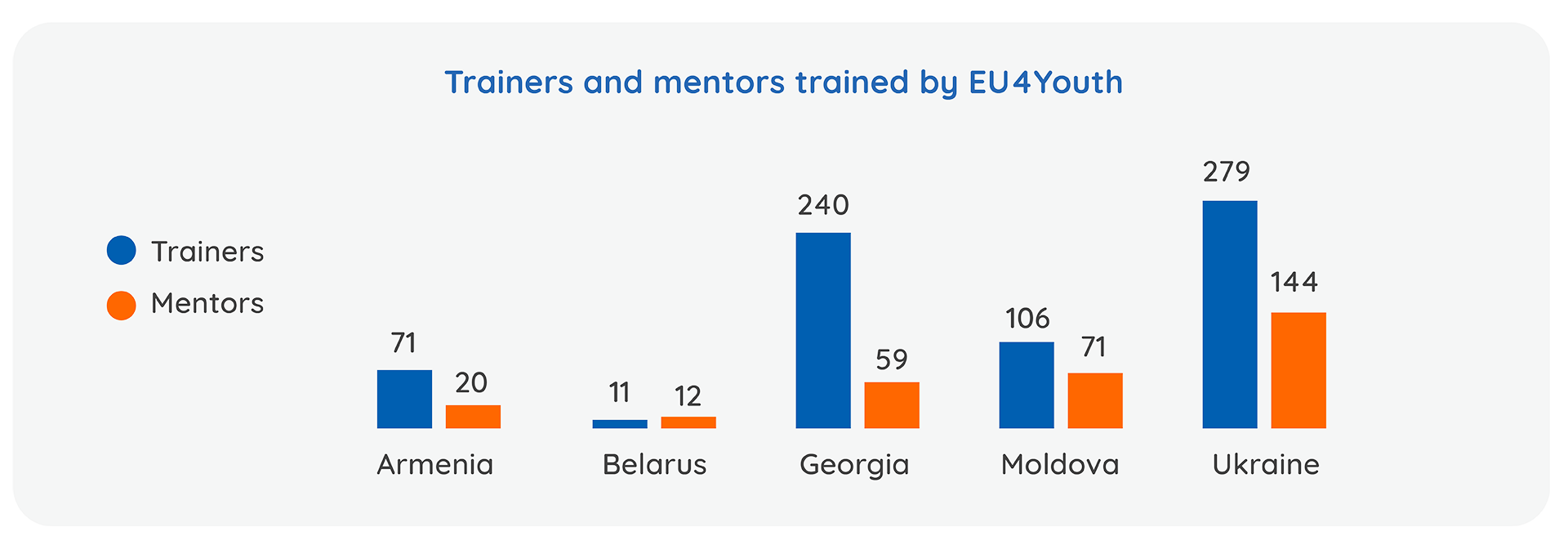
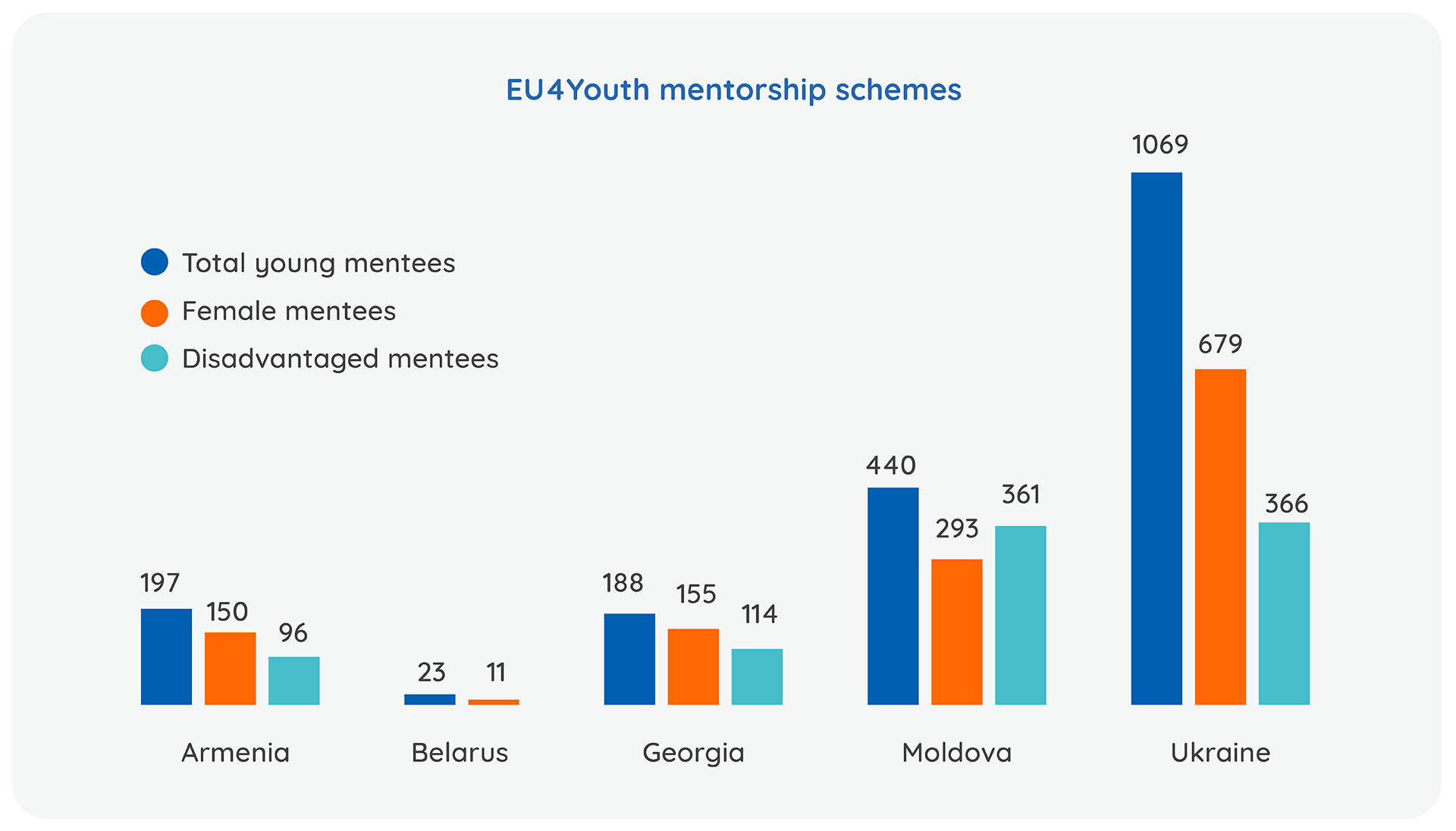
In 2024, over 300 mentors were trained to provide career counselling and guidance to more than 1,900 young mentees across the EaP region. Mentors are trained to provide services to youth in various settings, including schools, youth organisations and designated career guidance centres. About two-thirds (67%) of mentees were women, and nearly half (49%) were disadvantaged youth. Grantees further trained more than 700 trainers to deliver competence development activities and related trainings to young people.
The grant implemented by Child Fund Germany trained over 150 youth workers and educators on the innovative Social Student Companies (SCC) approach to foster social entrepreneurship and practical career management in schools and youth centres across Armenia, Georgia, Moldova and Ukraine.
Upon completing the training programme, trainers are expected to leverage their knowledge and skills to mentor a generation of young entrepreneurs capable of offering innovative solutions to social issues in their communities.
In addition to the trainings provided by the grantees, the EU4Youth - Youth Employment and Entrepreneurship project also organised a series of open lectures in April 2024 at the Ukrainian Mykhailo Dragomanov State University. The lectures targeted (future) teachers, youth workers, and other stakeholders in the educational sector, covering a range of topics, including non-formal education methods for teachers, self-assessments, innovative pedagogical strategies, challenges and transformations in the education systems, as well as youth engagement in education.
Educational resources
Besides dedicated training programmes, many grant projects have also developed innovative educational resources and guidance materials for local application. These resources ensure that teachers, youth workers and counsellors will be able to continue providing support and assistance to youth. The materials will also allow the training of new educators, therefore guaranteeing the sustainability of actions beyond the programme.
Since the start of the implementation of the regional grants in 2023, a total of 13 formal educational resources have been developed, which will be integrated into schools in the form of curricula, pedagogical handbooks, and other training materials.
In addition, grantees also developed 80 non-formal educational materials, ranging from informative videos and digital training tools to interactive games and chatbots. These resources are intended for use in extracurricular settings and can guide non-formal and informal learning at home or in community and youth centres.
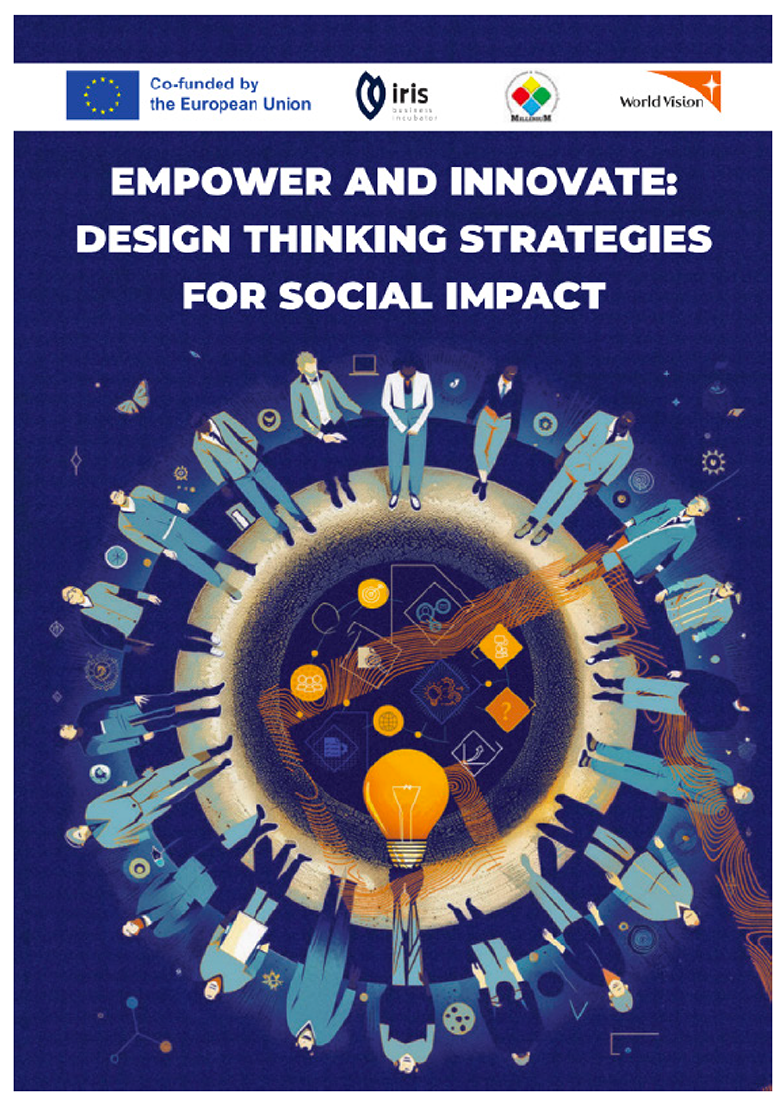
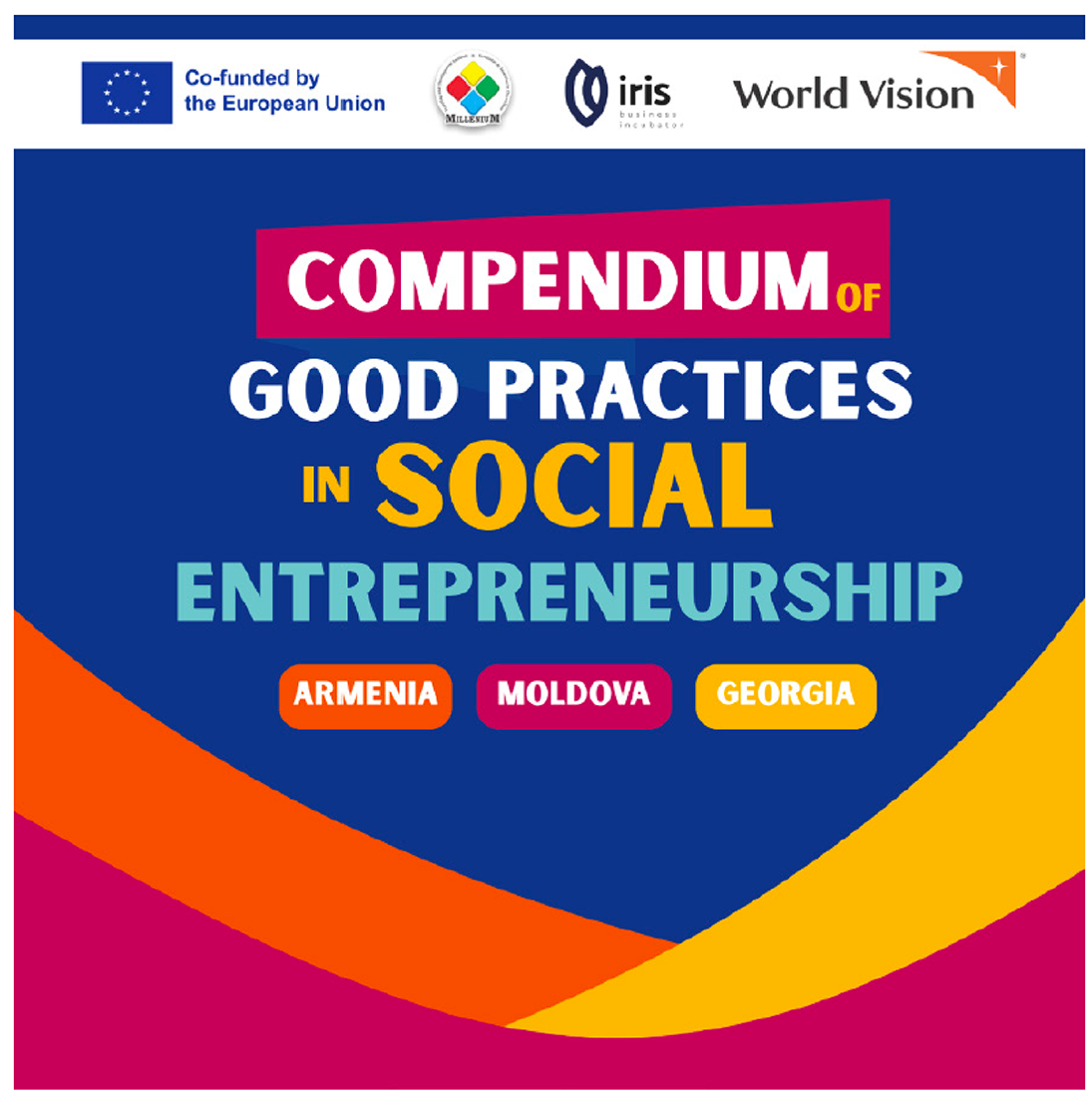
Among the resources developed in 2024 are the design thinking and social entrepreneurship handbook, and the compendium of good practices in social entrepreneurship, created as part of the SKYE Net grant. Implemented by World Vision, the grant aims to equip educators with the essential knowledge to foster social entrepreneurship among youth.
The resources were distributed to educational institutions, youth organisations, and business support organisations across Armenia, Georgia, and Moldova to promote youth-driven social entrepreneurship, with a focus on green and digital economies.
Promoting mobility and practical learning opportunities
To enable young people from the EaP region to broaden their perspectives and connect with peers from different countries, the EU4Youth programme is actively facilitating mobility and learning experiences. These opportunities allow young people to enhance their knowledge and soft skills, while also fostering civic and political engagement.
Mobility and exchange programmes moreover strengthen ties among youth from the EU and EaP regions, fostering mutual understanding and cooperation mechanisms that actively support EU integration efforts in countries like Moldova and Ukraine.
Work-based learning through internships and mobility
Practical work experiences and internships provide young people with valuable opportunities for both professional and personal growth. To support young people’s integration into the labour market, several EU4Youth grants offer internships in cooperation with local organisations and businesses.
Underscoring the importance of work experience for improved employability, the annual EU4Youth Survey in 2024 found that 100% of beneficiaries that were able to take part in an internship or mobility scheme through EU4Youth-funded initiatives found a job afterwards.
Traineeships for youth in Ukraine
In Ukraine, grantees have successfully facilitated internships and traineeship programmes for more than 250 young people in 2024. These work-based learning programmes have allowed young graduates to gain professional experience in the Ukrainian public sector, helped to reintegrate veterans into the labour market, and matched university students with welfare organisation in need of volunteers.
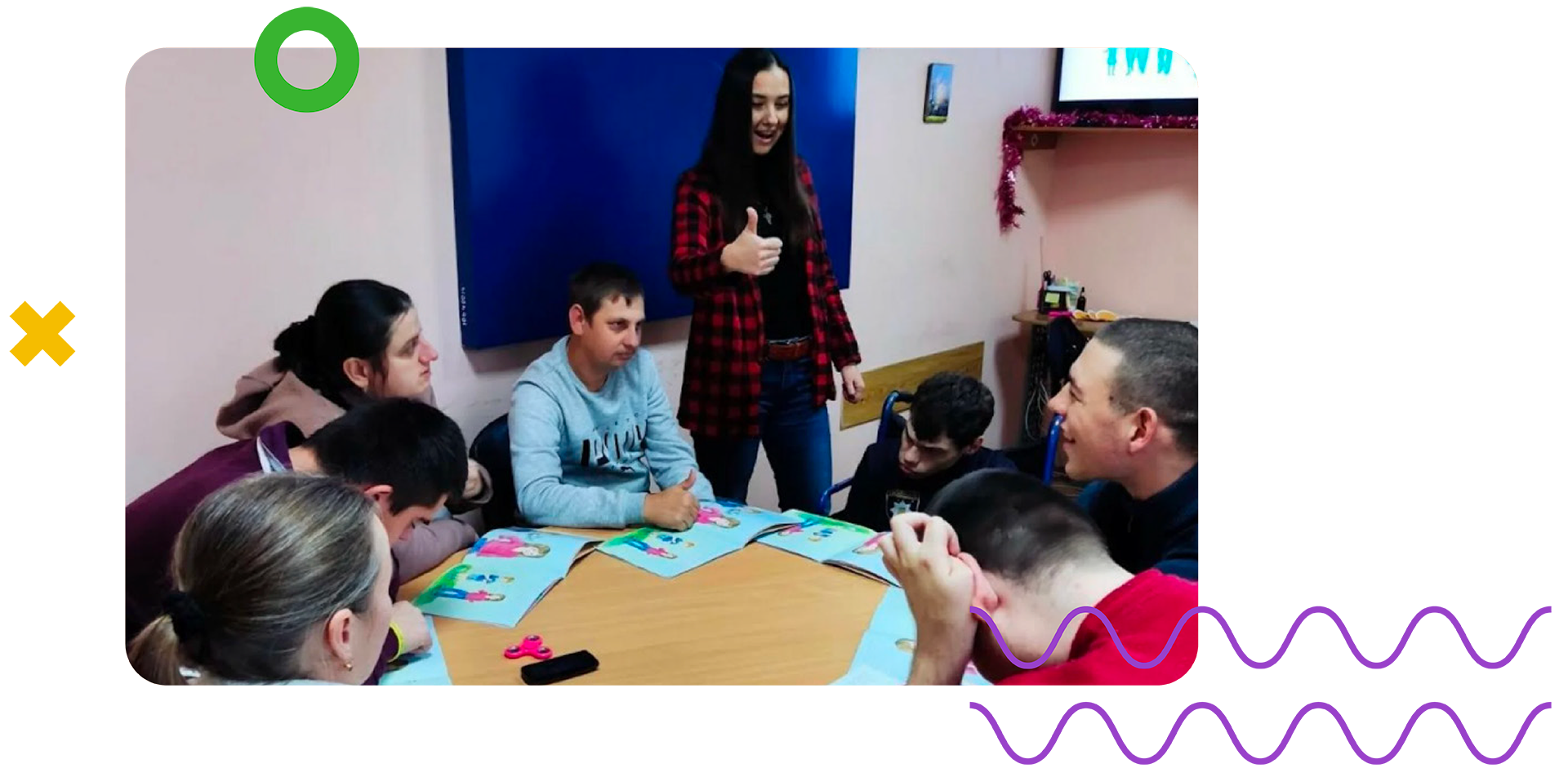
The story of 18-year-old psychology student Veronika Taras is a great example of the impact of work- based learning. Through the EU4Youth programme, Veronika was able to gain first-hand experience in volunteering with mentally disabled children at the Drohobych Voluntary Society for the Protection of Disabled Children in western Ukraine.
“Participating in this project has been a great experience for me. I feel like I’m in the right place. After the project ends, I will continue volunteering here.”
This initiative is part of a grant in Ukraine implemented by the All-Ukrainian NGO Coalition for Persons with Intellectual Disabilities, together with the Djerela Charity Association. They provide young graduates and university students specialised in social work, pedagogy, and psychology with practical work experience in the Ukrainian welfare system. Following a tailored training programme, young people are offered internships and volunteer opportunities with civil society organisations that provide care services to people with intellectual and psychosocial disabilities.
Thanks to this working experience, 82 young graduates have been able to sign employment agreements with local partner organisations so far, while nearly two-thirds of students (64%) felt that their employability had improved. Many students also plan on continuing to volunteer in the sector.
College of Europe Natolin scholarship
Since 2021, the EU4Youth - Youth Employment and Entrepreneurship project has awarded annual scholarships for the College of Europe to students from the EaP countries to increase their understanding of European politics and foster inter-cultural exchange and mutual learning.
Over the course of the ten-month programme in European Interdisciplinary Studies at the Natolin Campus in Poland, scholars are exposed to a stimulating academic curriculum while also benefiting from professional development training and language courses. Upon their graduation, they will have acquired both the knowledge and leadership competences that will allow them to become active changemakers in their countries.
Former EU4Youth scholarship recipient Oleksandra Lysa from Ukraine describes the studies at Natolin as a journey of growth, resilience, and transformation, explaining that the programme instilled in her the confidence and motivation to leverage her skills for the benefit of her country.
Following her immense personal and professional growth facilitated through the EU4Youth scholarship, Natolin graduate Mane Tsaturyan from Armenia began working at the EU Delegation back home in Yerevan. She is now dedicated to improving EU-Armenia relations.
“It’s incredibly fulfilling to feel like I am making a real difference.”
Anna Hovhannisyan, a 2023 alumna from Armenia, is dedicated to sharing her experience with others, adding that her time at the College of Europe was rewarding not just because of the degree she earned, but also because the programme gave her purpose and inspired her to positively impact other people’s lives.
“I wanted to be someone who could influence change, to help others find their voices and shape their own futures. Without this opportunity, I wouldn’t have been able to change my career direction so dramatically or enhance my academic background to where I am today.”

With the help of the EU4Youth scholarship, 15 students - including 12 young women - from Armenia, Azerbaijan, Moldova and Georgia graduated from the 2023/2024 cohort in summer 2024. Highlighting their potential as young leaders in their country, their research theses focused on salient issues such as disinformation strategies, national security policy, public support and government policy on EU accession, and NATO and EU cooperation.
In autumn, 18 new scholarship recipients joined the 2024/2025 cohort, including four students from Belarus and two students from Ukraine.
Participating in one of the many extracurricular activities offered by the College of Europe, EU4Youth scholarship recipients were able to take part in a study trip to Vilnius in October 2024, where they learned about Lithuania’s EU accession experience.
New College of Europe Natolin fellowship programme
To further extend the reach and impact of the College of Europe partnership, the EU4Youth - Youth Employment and Entrepreneurship project launched a new Natolin fellowship programme targeted at young PhD students and recent graduates from Georgia, Moldova and Ukraine.
The programme at the campus in Natolin is designed to support young scholars in their academic and professional development, equipping them with the necessary skills and experience to drive European integration in their home countries.
Through a competitive selection process, eleven successful applicants, including eight young women, were awarded a fellowship in July 2024.
Over the course of the eight-month programme, the fellows completed a variety of academic modules centred on EU decision-making and policy analysis in the context of EU enlargement. Fellows were also exposed to skills-based trainings focused on enhancing their research and public communication skills, covering topics such as the use of open-source intelligence, countering disinformation, and research integrity in the European Research Area. Additionally, they were given the opportunity to complete a traineeship as part of the programme, providing them with hands-on experience under the guidance of experienced mentors.

Improved employability through skills recognition and validation
In addition to competence development and work-based learning and mobility opportunities for youth, the recognition of skills acquired during these experiences is equally important to enhance youth employability. Given the evolving needs of the labour market and the opportunities that extracurricular activities and volunteer experiences can provide for transversal skills development, it is important that institutions create official validation processes for skills acquired outside of formal learning.
Adapting existing European frameworks for skills assessment, the EU4Youth programme is actively promoting efforts to provide young people with adequate tools and mechanisms to test and validate their skillsets.
EntreComp and EntreGram4Youth in Ukraine
In order to enable youth to better assess and validate their entrepreneurial competences, the EU4Youth - Youth Employment and Entrepreneurship project, together with the Ministry of Digital Transformation in Ukraine, has developed the Entrepreneurial Competence Framework for Youth based on the Entrepreneurship Competence Framework, as well as the accompanying self-assessment tool EntreGram4Youth.
The framework breaks down entrepreneurial competences in terms of knowledge, skills, and attitudes, promoting skills development through both formal education and hands-on experience. The EntreGram assessment tool moreover helps young people to validate entrepreneurial skills gained through non-formal and/or informal learning experiences such as volunteering or online courses. The results can be added to CVs and start to be recognised by employers in Ukraine. Since its launch, close to 1,000 young people have used EntreGram to understand and improve their entrepreneurial skills.
The success of EntreComp4Youth in Ukraine shows that with the right support, entrepreneurial education can become accessible, practical and highly impactful. It has the potential to shape a generation of young people ready to create jobs, foster innovation, and contribute to their local communities.
To further promote the adaptation of the framework and assessment tool in other EaP countries, the EU4Youth programme organised a series of regional online webinars on fostering youth entrepreneurship through EntreComp4Youth and EntreGram4Youth. Bringing together government officials, educational entities, NGOs, and private sector stakeholders, the webinars discussed measures to tailor the tools to local contexts and challenges in youth employability and entrepreneurship. This laid a strong foundation for initiating the adaptation process in countries such as Armenia and Moldova, which have shown a strong interest in the initiative.
YouthPass methodology and manuals
Advancing skills validation and recognition of non-formal and informal learning in EaP countries, the EU4Youth programme further supports the promotion of the YouthPass methodology.
YouthPass is a recognition instrument for identifying and documenting learning outcomes that are acquired in projects under the Erasmus+ Youth and the European Solidarity Corps programmes. The YouthPass methodology promotes individual reflection to make learning outcomes visible and validate participation in non-formal and informal learning as an educational experience.
The adoption of YouthPass-inspired frameworks and tools in EaP countries can enhance the validation and recognition of skills for young people, especially in areas such as green, digital, and entrepreneurial skills that are often gained through non-formal and informal learning.
In cooperation with the National Erasmus+ offices and the SALTO Eastern Europe and Caucasus Resource Centre, the EU4Youth programme supported the translation and dissemination of key YouthPass manuals in 2024, including the ‘YouthPass Strategy’, ‘Valued by You, Valued by Others’ and ‘YouthPass Unfolded’.