Entrepreneurship and Employment
Entrepreneurship continues to offer young people in the Eastern Partnership region a powerful pathway to shape their own careers while generating meaningful social and economic value for their communities. By helping youth turn ideas into sustainable initiatives, entrepreneurial support not only addresses persistent unemployment challenges but also empowers young people to take ownership, foster innovation, and act as local changemakers.
To drive systemic improvements in youth employment and entrepreneurship, the EU4Youth programme combines direct support to young people with institutional capacity building and targeted policy assistance. In 2025, the programme further strengthened this dual approach by supporting the development of enabling policy frameworks, improving local support structures, and expanding opportunities for young people to acquire the skills, resources, and confidence needed to create and grow their own ventures.
Building on the foundation established in previous years, EU4Youth continued to pilot innovative community-based initiatives through its grant projects, delivered tailored entrepreneurial learning materials, and deepened cooperation with national institutions to reinforce mutual learning and promote Youth Guarantee type measures across the region. Together, these efforts aim not only to equip young people with entrepreneurial skills, but also to shape a more supportive ecosystem in which youth-led enterprises can thrive.
Strengthening local economies
In 2025, EU4Youth grant projects provided financial assistance to 113 young entrepreneurs and technical assistance to a further 168, helping to launch 100 youth-led start-ups that remained active. A total of 2,924 young people took part in competence development activities on entrepreneurship across Ukraine, Georgia, Moldova, Armenia and Belarus.

These youth-led ventures are already contributing to job creation, local service provision, and community resilience – demonstrating how entrepreneurship can transform not only individual livelihoods but also entire local economies.
A growing number of success stories reflect how EU4Youth’s entrepreneurship support translates into meaningful impact on the ground. From eco-friendly manufacturing to digital services and locally grounded social enterprises, EU4Youth is helping young people to transform innovative concepts into sustainable economic activity, strengthening local ecosystems and contributing to broader community well-being.
In Moldova, trained community mediators are helping young Roma navigate access to services, employment initiatives, and entrepreneurship pathways “acting as a bridge between institutions and young people who often feel invisible,” as one mediator described.
In Georgia, where EU4Youth support helped young innovators build solutions for the green transition. BioNova, a youth-led cleantech enterprise that developed a biogas device capable of turning organic waste into clean energy and fertiliser, benefited from EU4Youth mentoring, technical guidance, and business diagnostics. As a result, it, strengthened its business model, refined its technology, and prepared for market entry – demonstrating how green youth enterprises can contribute both to environmental sustainability and to new economic opportunities across the region.
In Ukraine, six EU4Youth-supported organisations helped young people, internally displaced persons, and veterans develop new business ideas, access mentoring, and secure seed funding that enabled them to rebuild economic stability during wartime. As one beneficiary noted,

“These opportunities helped us turn our ideas into real solutions for our community-solutions that create jobs, support displaced families, and give people hope.”
Mini-grants and tailored mentoring accelerated enterprise growth and resilience, with youth-led businesses engaged in the mentorship programme reporting an average 30% increase in performance within six months.
In Georgia, the Ikorta Studio a youth-led social enterprise run by internally displaced women, experienced a similar transformation. With mentoring and business guidance from the EU4Youth Greenhouse for Social Innovators project, the enterprise strengthened its financial management, refined its product strategy, and expanded its services by introducing jewellery making workshops. The support helped Ikorta stabilise its operations, enter new markets, and create dignified income opportunities for women rebuilding their lives after displacement.
In Moldova, Sergiu Gurău, a longstanding social entrepreneur, used EU4Youth support to significantly expand his work with young people with disabilities. Through a strategic partnership and project assistance, Sergiu delivered digital and entrepreneurial training to hundreds of young people, helping them build confidence, develop employment ready skills, and access new economic opportunities. His enterprise grew in scale and impact, offering an inclusive model that demonstrates how social entrepreneurship can empower some of the most marginalised youth to participate fully in local economic life.
Building youth-led solutions
Across the Eastern Partnership, young people are increasingly stepping forward as drivers of economic and social innovation. This chapter explores how EU4Youth helps build those systems, and how young people across the region are using them to shape better employment pathways for themselves and their peers.
 EU4Youth’s employment and entrepreneurship interventions have helped unlock this potential by strengthening the systems, institutions, and local ecosystems that enable youth-led solutions to take root. During the reporting period, the programme expanded youth participation in labour market initiatives, supported public institutions in designing more responsive services, and fostered an environment where young people can shape the future of their communities through employment, enterprise and civic action.
Based on data reported in the CPVA Progress Report, a central pillar of this progress was the programme’s support for more inclusive and youth‑responsive employment systems. In 2025, EU4Youth delivered 14 major capacity‑building events for Public Employment Services (PES) across Armenia, Moldova, and Ukraine, equipping 459 officers with modern approaches to labour‑market forecasting, digitalised service provision, youth outreach, and human resources development. These efforts strengthened frontline services on which young jobseekers rely, particularly those facing multiple barriers, including NEETs (Not in Education, Employment, or Training), displaced youth, and young people from marginalised communities.
Public Employment Services (PES) continued to play a frontline role in supporting young jobseekers, adopting more youth‑responsive approaches, expanding digital services, and improving outreach to vulnerable groups. These efforts strengthened national systems’ capacity to deliver tailored guidance, enhance profiling, and respond more effectively to emerging labour‑market needs. Cross‑sector collaboration further accelerated systemic improvements.
 Civil society also played a growing role in shaping youth employment solutions across the Eastern Partnership. Through regional exchanges and dialogue labs, youth organisations, national youth councils, and CSO networks strengthened their capacity to engage in NEET outreach, youth employment governance, and local activation measures. These platforms enabled actors such as the National Youth Council of Moldova and youth networks from Armenia, Georgia, and Ukraine to co‑design policy recommendations, participate in cross‑country learning, and contribute to coordinated approaches on employability and activation.
Across all entrepreneurship-focused interventions, a total of 281 young people benefited from financial or technical assistance to advance their business ideas. They included 113 young entrepreneurs who received direct financial support, of whom 69 were women and 38 were disadvantaged young people. A further 168 young people strengthened their entrepreneurial capacities through tailored technical assistance, with 105 women and 42 disadvantaged participants gaining skills, guidance, and business development support tailored to their needs.
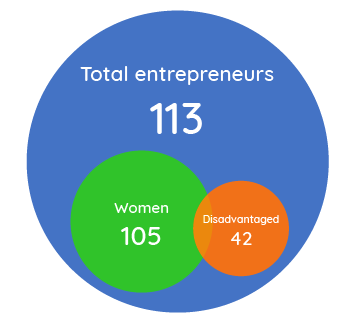
Taken together, these results demonstrate a steadily growing entrepreneurial ecosystem in which young people, including women and disadvantaged groups, are equipped with the financial resources, technical knowhow, and confidence needed to launch and grow viable enterprises.
Based on the CPVA Narrative Progress Report for 2025, the programme strengthened youth employment policymaking by deepening cross‑sector coordination at national level. In Armenia and Moldova, EU4Youth supported the functioning of National Steering Groups (NSGs) - national coordination platforms that bring together ministries, public employment services, youth councils, civil society organisations and social partners to jointly guide youth employment policies. Through these groups, more than 120 institutional stakeholders were convened to align youth employment strategies, review and validate policy proposals, and support the preparation of future labour‑market reforms.
Throughout 2025, these groups met several times to align youth employment strategies, review and validate policy proposals, and support the preparation of labour‑market reforms. Their work contributed to the validation of policy recommendations, strengthened national ownership of youth employment reforms, and helped integrate EU4Youth‑supported measures into longer‑term policy frameworks.
In Ukraine, youth employment reforms progressed during wartime with the establishment of an Inter‑Agency Working Group, supported under the EU4Youth programme. The Working Group brought together relevant national stakeholders and contributed to the adoption of amendments formally anchoring Youth Guarantee‑type measures in national legislation.
At community level, civil society partners increasingly became direct contributors to employment pathways. In Moldova, local youth organisations working alongside the municipal Public Employment Service (ANOFM Chișinău) piloted new outreach models for Roma and Sinti NEETs, engaging more than a hundred young people through joint mapping, awareness activities, and co‑management mechanisms.
In Ukraine, youth organisations and youth centres implementing the ‘Startui’ project established youth centre based social enterprises, while the Checkpoint Rehabilitation Space in Zaporizhzhia delivered thousands of psychosocial, legal, and employability consultations and expanded entrepreneurship and reskilling opportunities for young veterans and internally displaced youth. For Belarus, exile‑based organisations such as BEROC and RADA adapted entrepreneurial and employability tools into digital formats, ensuring continued access for young Belarusians despite restrictive domestic conditions.
Youth employment and innovation ecosystems
Building on earlier interventions, this section highlights EU4Youth’s contribution to strengthening institutional coordination and policy frameworks underpinning youth employment.
Youth organisations and local stakeholders also expanded innovation spaces. Initiatives such as SKYE Clubs enabled young people in Armenia, Georgia, and Moldova to design and deliver community projects, while social entrepreneurship incubators supported by World Vision, ChildFund, and Junior Achievement helped young people turn ideas into real ventures – from eco‑friendly wooden toy production in Moldova to school‑run circular‑economy enterprises in Ukraine. These community‑driven approaches strengthened local leadership and created practical, small‑scale employment and learning opportunities.
Youth-led social enterprises
Across Ukraine, EU4Youth support helped to launch eight youth centre‑led social enterprises and ten additional social businesses created by veterans and internally displaced young people.
In Bucha, Diana, a youth worker with no prior business experience, channelled her determination to help her community into a social enterprise: the EcoPrinting Station. With EU4Youth training, mentoring and a grant, she built a printing hub that not only produces eco-friendly merchandise but also reinvests profits directly into youth initiatives across the Kyiv region.
“I am not a businesswoman… But when you have an idea and support, it becomes a reality,”
Diana explains.
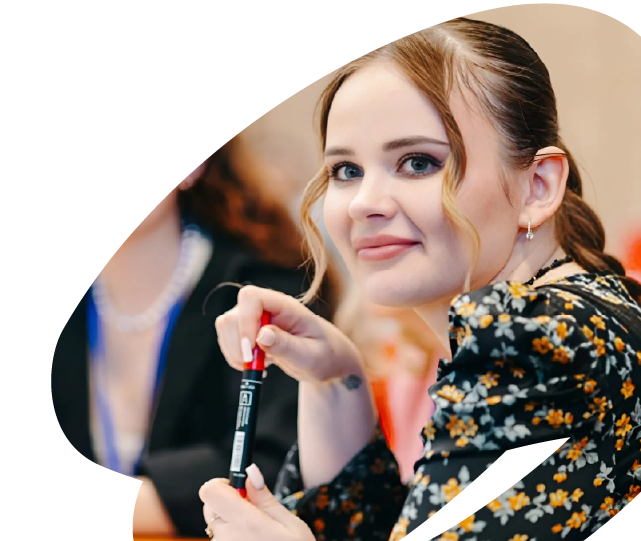
The enterprise now funds scout camps, mini-grant competitions for teenagers, and educational activities, proving that even small youth-led ventures can contribute to community healing and long-term resilience after occupation.
EU4Youth’s Personal Assistance Programme provided lifechanging support for families of people with intellectual disabilities, while creating meaningful employment for young assistants. Through the programme, in 2025, 370 young people were trained as personal assistants, 312 completed supervised practice, and 82 found employment supporting people with intellectual and psychosocial disabilities.

In Sumy, Ukraine, Iryna, a single mother caring for her adult son Dmytro, says the arrival of a young assistant, Yulia, transformed their lives:
“My joy cannot be put into words… I can finally breathe easy... Such personal assistants are an invaluable help.”
Yulia, newly trained under the programme, gained professional experience and a stable income while enabling the family to regain its independence and dignity.
EU4Youth’s crisis-responsive entrepreneurship and employment interventions demonstrate that even in a time of war, young people’s ideas can grow into institutions that strengthen local economies, provide social care, and inspire hope. These youth-led efforts show that Ukraine’s recovery is not only a matter of postwar reconstruction, it is already happening now, in homes, youth centres, classrooms, rehabilitation spaces, and community initiatives across the country.
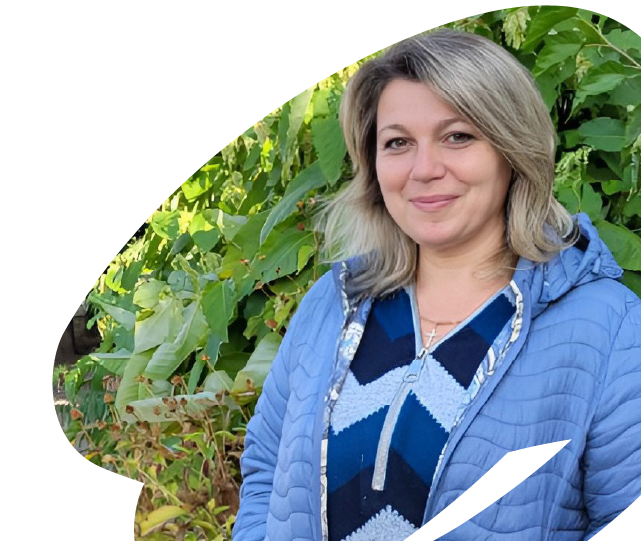 Beyond supporting individual entrepreneurs, EU4Youth strengthened community‑based youth ecosystems through the SKYE Net – Skills and Knowledge for Youth Empowerment Network, where young people applied soft‑skills training, mentoring, and hands‑on experience to drive social and economic change in their regions. Across Armenia, Georgia and Moldova, SKYE youth turned local challenges into practical, community‑driven solutions.
In Moldova, for example, the GUGA GAGA social enterprise grew from a student idea into a workshop producing eco‑friendly wooden toys that offer families sustainable alternatives to plastic. In Georgia, a young psychologist transformed a family garage into an inclusive educational centre where children learn through play, while another young participant launched an event‑management initiative that reinvests its profits to support vulnerable community members. In Armenia, youth leaders revitalised their communities through SKYE Clubs, from implementing environmental and social projects in Vardenis to converting an abandoned family home into a multifunctional youth centre that now serves as a hub for skills development and creativity.