Main insights and EU4Youth overview
In 2025, the Eastern Partnership region exhibited increasingly divergent political trajectories, with Moldova, Ukraine and Armenia continuing to advance in their EU integration efforts despite ongoing instability and external pressures by Russia affecting their national contexts. Ukraine’s progress was particularly notable: even while facing the realities of a full-scale war, the country improved its overall Eastern Partnership Index score, reflecting remarkable resilience and a sustained commitment to EU-aligned reforms across multiple sectors. This determination to uphold democratic and institutional progress under severe strain underscores Ukraine’s continued orientation toward a European future.
In stark contrast, Georgia experienced pronounced democratic backsliding during the same period. Georgia experienced measurable declines in media freedom, judicial independence and anti‑corruption performance, alongside tightened control over civic freedoms and increasing constraints on freedom of assembly and expression. These developments marked a clear departure from earlier reform progress and raised serious concerns about the country’s political direction and its alignment with democratic norms.
Young people across the Eastern Partnership were directly affected by these shifting political and societal landscapes. According to the Eastern Partnership Index 2025, youth faced shrinking civic space, the consequences of conflict and instability, and increasingly limited avenues for meaningful participation and empowerment, making 2025 a particularly challenging year for youth engagement and prospects across the region.
Against this backdrop, EU4Youth played an important role. Despite deteriorating political and security conditions, the programme continued to advance youth participation, skills development and empowerment initiatives, demonstrating adaptability and resilience. As part of its 2025 efforts, the EU4Youth: Youth Engagement and Empowerment Small Grants Scheme, implemented by GIZ, expanded opportunities for youth organisations in Armenia, Georgia, Moldova and Ukraine, enabling them to pilot innovative projects focused on youth inclusion, civic participation and community-level engagement. Through these actions, EU4Youth helped to sustain spaces for youth leadership and civic participation, working against the odds of challenging political realities.
EU4Youth ongoing and past projects
EU4Youth promotes the active participation of young people in society and the economy in the Eastern Partnership countries, providing capacity building and policy support to national stakeholders in the fields of youth work, education and employment.In line with its objective to strengthen youth participation and policy development across the EaP region, EU4Youth has implemented a series of projects:
- EU4Youth Coordination and Support - EY 2018-2023
Ensured the smooth coordination of the overall EU4Youth programme, by supporting the monitoring, communication and visibility of the programme.
- EU4Youth Youth Engagement Roadmaps – GOPA 2019-2023
Completed in 2023, the project has promoted youth participation, youth employment partnerships and youth social entrepreneurship. It has advanced the development of evidence-based policy responses to the challenges faced by young people, and promoted their involvement in policy discussions, using roundtables and policy labs in the region to facilitate youth engagement in policy making.
- EU4Youth Coordination and Policy Support – EY 2023-2026
- 120 Alumni
- 30+ Facilitators Trained
- 3,000+ young people reached
Provides coordination and policy support for the programme in alignment with EU and national policy priorities, supporting strategic partnerships, programme monitoring and communication across the Eastern Partnership region. The project also coordinates the EU4Youth Alumni Network, provides sectoral expertise to strengthen alignment with relevant policies and initiatives, and supports the design, rollout and methodological consolidation of EU4Youth Youth Policy Labs as participatory tools for youth‑inclusive policymaking. In addition, it supports key thematic activities addressing young people.
- EU4Youth - Youth Employment and Entrepreneurship – CPVA 2021-2026
- 2,600+ PES Staff Trained
- 10,500 young people trained
- 117 Social Enterprises established
Co-financed by Lithuania, and implemented by the Central Project Management Agency (CPVA), the project promotes the active participation of youth in both democratic life and labour markets. Building the structural capacities of key institutions, activities cover partnerships among public employment services and other stakeholders to address youth employment issues, promoting youth involvement and facilitating knowledge transfer and exchange with the EU experience on the Youth Guarantee.
- EU4Youth - Youth Engagement and Empowerment – GIZ 2023-2025
- 510+ Events
- 112 Policy Recommendations Developed
- 365 Organisations Strengthened
Implemented by GIZ, with co-financing from Germany, the project builds on the work of previous project phases to actively involve young people in policy dialogue and decision-making processes. It does so by strengthening the ability of youth organisations and public institutions to engage in participatory and structured policy dialogue at local, regional, and national level, while also improving the quality and outreach of youth work in the region.
EU4Youth ongoing and past projects
The EU4Youth programme has also supported a range of targeted grant schemes designed to strengthen the work of local organisations active in the youth sector.
- Small grants
In 2024, a small grants scheme was launched under the EU4Youth: Youth Engagement and Empowerment project, implemented by GIZ, to support innovative pilot initiatives at the local level. The scheme invited youth organisations in Armenia, Georgia, Moldova and Ukraine to propose activities addressing climate change and environmental issues, the inclusion of young people with fewer opportunities, and country‑specific priorities such as strengthening youth participation in Moldova and supporting young people’s role in Ukraine’s recovery. Most of these projects were implemented throughout 2025, with 33 youth organisations awarded small grants to carry out their initiatives across the region
- Regional grants
In two phases between 2018 and 2023, EU4Youth provided grants to ten large regional projects focused on increasing the employability, (social) entrepreneurship and participation of young people in society. Since 2023, seven regional grant projects have been implemented under the Youth Employment and Entrepreneurship project, focusing on supporting youth employment and entrepreneurship in the green and digital economies.
- Direct grants to Ukraine (‘Ukraine Window’)
Since 2023, the EU4Youth programme has been directly supporting locally driven initiatives in Ukraine to help mitigate the impacts of the war. These grants are designed to strengthen both societal and economic resilience, focusing on practical needs within affected communities. Activities include assistance for youth centres, targeted support for persons with disabilities, rehabilitation services for young veterans, and investments in post-conflict education and broader recovery efforts.
EU4Youth scholarships and fellowships
To support young leaders from the Eastern Partnership countries in becoming future changemakers and to promote cultural exchange and learning, EU4Youth: Employment and Entrepreneurship, implemented by CPVA, offers scholarships and fellowships at the College of Europe Natolin campus.
- College of Europe (Natolin Campus - Poland) scholarships
Increases the understanding of EaP youth about European politics and governance and fosters multi-cultural learning through scholarships for the College of Europe in Natolin.
- Natolin Fellowship Programme
Since 2024, EU4Youth has extended its partnership with the College of Europe Natolin Campus to offer a unique fellowship programme to young professionals from EaP countries.
Most effecive approaches

ensured ownership and sustainability

avoided duplication and accelerated implementation

enabled access to wider expertise and target groups

allowed reaching vulnerable groups in different contexts
Key highlights for 2025
January
EU4Youth supported the Women’s League NGO in launching the Girls Empowerment Academy 1.0, strengthening leadership skills and civic participation of young girls to influence decision‑making in their communities across Ukraine.
EU4Youth supports ‘YELI’ initiative empowering young leaders in Southern Moldova
February
EU4Youth Alumni gather for IdeaLab event in Chisinau.
March
EU4Youth supports training for public officials and a policy lab in Kyiv.
EU4Youth supports a youth leaders’ camp in Zolotonosha, Ukraine, inspiring young participants to strengthen civic engagement and develop community‑driven actions under the guidance of the Youth Development Centre NGO.
April
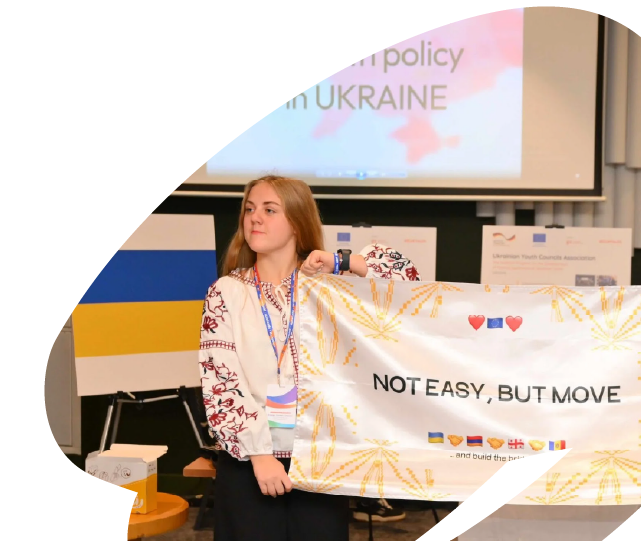
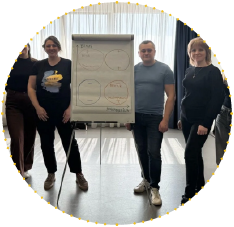
EU4Youth supports a two‑day workshop in Lviv that brought together eight national youth councils to strengthen coordination and influence the development of state youth policy in Ukraine.
The EU‑supported Natolin Fellowship Programme successfully concluded after eight months, equipping 11 Fellows from Ukraine, Moldova, and Georgia with knowledge and skills to advance European integration.
EU4Youth: Youth Engagement and Empowerment project launches Youth Policy Labs in Georgia.

May
EU4Youth: over 500 young people help shape Armenia’s Youth Policy Law with EU support.
Youth Policy Labs launched in 15 communities across Armenia.
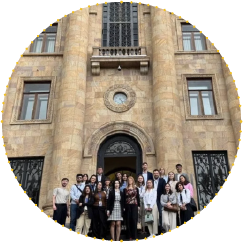
EU4Youth study visit to Armenia fosters high-impact exchange on youth participation in policymaking.
The EU4Youth initiative organised a study visit to Armenia from 5-7 May.
June
EU4Youth organises study visit to Poland.
EU4Youth supports a two‑day training empowering young Ukrainian women with leadership and political career skills.
July
Under the EU4Youth programme, an international conference in Chișinău brought together over 150 participants from Armenia, Georgia, Moldova, and Ukraine to showcase and strengthen youth‑led social student enterprises.
With EU4Youth support, the Ukrainian Youth Councils Association held a final forum in Kyiv bringing together youth councils and stakeholders to reflect on achievements and shape the future of youth political education in Ukraine.

August
To harmonise the implementation of Youth Policy Labs (YPL) across the Eastern Partnership, the EU4Youth Coordination and Policy Support project has developed a comprehensive toolkit. This document is now available as a resource for any organisation interested in planning and implementing an impactful policy lab in accordance with EU guidelines.

September
With EU4Youth support, the National Ukrainian Youth Association held an inclusivity training that strengthened member organisations’ skills in accessibility, human rights, and barrier‑free approaches while building a network of inclusivity ambassadors.
With EU4Youth support, national training in Rivne strengthened young people’s awareness of healthy lifestyles and mental health, addressing challenges linked to war and post‑war recovery.
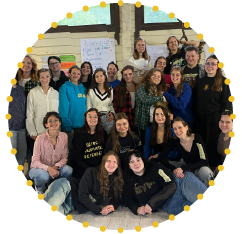
National networks of local youth councils from Moldova, Ukraine, and Georgia met for a regional exchange to share initiatives, strengthen democratic youth participation, and build cross‑border collaboration.
October
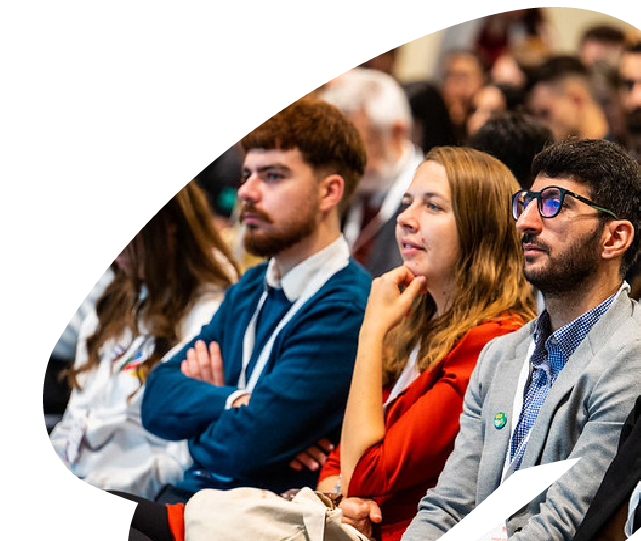
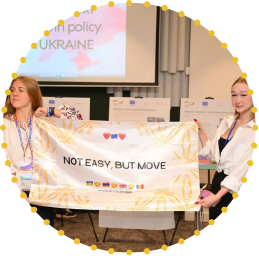
The EU4Youth Days 2025 took place in Brussels on 8–9 October, marking another successful chapter of this flagship event dedicated to advancing employment, participation and education opportunities in the Eastern Partnership. Building on the tradition of previous editions, the event brought together around 150 participants from the EU4Youth programme and beyond, including youth representatives, practitioners, decision-makers and stakeholders from the EU and Eastern Partnership countries
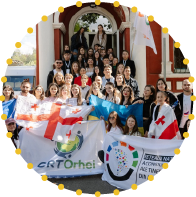
EU4Youth Regional Youth Exchange in Yerevan brought together over 60 youth leaders and civil society representatives from Armenia, Georgia, Moldova, and Ukraine to strengthen regional cooperation and youth engagement.
November
The Tech4Skills Ideathon in Tbilisi brought together young people to boost engagement in the TVET sector, drawing on youth‑driven insights developed through Georgia’s Youth Policy Labs with EU4Youth support.
The EU4Youth project hosted the Youth Organisations Forum in Tbilisi, bringing together around 30 youth NGOs and over 100 participants to strengthen cooperation and youth engagement.